Monday, 14 May 2012
Wednesday, 9 May 2012
Where to Buy Estonian Birthday Cards
A range of Estonian birthday cards can be found on Amazon.-


More Estonian cards can be found at http://www.zazzle.com/merelind


Monday, 7 May 2012
Estonian Rissoles Recipe
This is my father's recipe which my whole family loves. I suspect
it may even have been my grandmother's recipe too. They're so tasty!!

Ingredients
500g
minced beef
4
slices of bread
I
large onion – grated
1
packet chicken soup mix
2
eggs
Salt
and pepper
½
cup plain flour
Method
In
a large bowl, soak the bread in water until soppy and then drain well. Add the beef, onion, and soup mix and combine well. Beat eggs and add to mix along with
desired amount of salt and pepper. On a cutting board sprinkle the flour evenly
upon the surface. Take 1/8th of the mix into your hands and roll into
a ball, then gently roll the rissole onto the flour to seal the surface. Place
on a lined baking tray ready to BBQ, grill or fry. Makes approximately 8
rissoles.

Friday, 4 May 2012
Estonia Celebrates 100 Years of Film History.
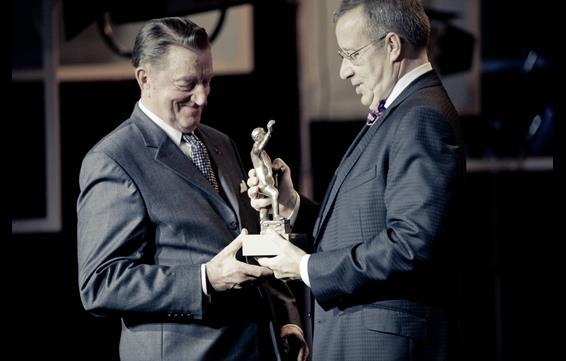
With a centenary of cinema to celebrate, Estonia used April 30 to recognise the achievements of some its most venerated stars and directors.
The small Baltic state of Estonia pulled out all the stops on Monday as it commemorated 100 years since the first Estonian movie - Johannes Pääsuke’s 1912 political storyBear Hunt in Pärnu County (Karujaht Pärnumaal) – was made.
The day began with the ferrying of various local film luminaries from Tallinn to the university town of Tartu on the ‘CineTrain’. Replete with film posters from the history of Estonian cinema, on board screenings of classic moments from Estonian film history and a free drink or two, the ‘CineTrain’ ensured the assembled throng were in high spirits on arrival.
A parade from Tartu Train Station to the Estonian National Museum - where a stamp commemorating Johannes Pääsuke was unveiled – kept the party atmosphere alive and on to the evening for the Estonian Film 100th Anniversary Award Show.
Broadcast live on national television, the show itself was an impressive affair striking a fine balance between reverence and humour. Noted comedians/actors Ott Sepp and Märt Avandi took hosting duties and – a la Billy Crystal at the Oscars – inserted themselves into scenes of renowned Estonian movies, much to the delight of the audience.
The awards themselves – voted for by a panel of Estonian film industry experts – ranged from the light-hearted (including ‘Best Quote’, ‘Best Couple’ and ‘Motif That Has Defined Estonian Cinema’ – which went to ‘ambiguous eyes’) to the more serious matters of Best Actor (which went to Lembit Ulfsak, the star of numerous films and TV shows) and Best Actress (the winner of which, Elle Kull, appeared by video to say that she didn’t deserve it.)
The biggest winner of the night was Kevade (Spring)(1969), a beloved coming-of-age tale adapted from a classic Estonian novel, which won Best Estonian Film of All Time as voted by the public. Receiving his award from Toomas Hendrik Ilves, the President of Estonia, director Arvo Kruusement received a standing ovation
Whilst very much a celebration of times past, the ceremony and ensuing after-party saw venerated directors mix with their contemporary counterparts (including Ilmar Raag, the director of Estonian hit filmKlass) and – for one day at least – the Estonian Film Industry felt very big indeed.
Sunday, 29 April 2012
“Skype - The Poster Child of Estonia’s Free Market Economy”
Mention the names Ahti Heinla, Jaan Tallinn and Priit
Kasesalu and people probably won’t recognise them but say the word “Skype”, the
product they developed in Tallinn in 2003, and you will discover it’s a
household name. Skype is undoubtedly
Estonia’s greatest contribution to the global telecommunication industry; it is
just as significant as Facebook, Google and the Internet itself. Skype has in excess of 663 million registered
users; this amounts to approximately 8% of the world’s entire population and
the number of users continues to grow every day.
Aside from gaining its independence, Skype is one of
Estonia’s greatest achievements. It enables
one user based, for example, in the very far north of Finland to have a video
conference with someone in the south of New Zealand for free. This was unthinkable a mere ten years ago and
the technology for peer to peer communication is improving constantly. In March 2012 Skype announced its latest
feature – the new talk and record Skype Recorder which enables users to record every
single call, instant message or video conference and store it on the Skype
database – for life. This means precious memories and important conversations
can be stored, retrieved and cherished forever.
These three Estonian developers had previously created the successful
Kazaa product which was backed by Danish and Swedish investors Niklas Zennström and Janus
Friis. In 2003 these same investors backed the Estonian developers once
again to create the new product which would later become Skype. This would harness VoIP technology and allow
any internet user to call another and have a voice conversation in real
time. VoIP is a technology which
converts a person’s voice into data packages which are then sent over the
internet and converted back into voice at the other end – all at extraordinary
speed. This enabled any two Skype users
to talk to each other, irrespective of where in the world they happened to be. The only requirements were that both parties each
had Skype accounts, PCs, sets of headphones and a microphone. Within one month of launch Skype software had
been downloaded one million times and now, 9 years later, more than 663 million
people have Skype accounts with around 17 million users being online at any
given time.
The genius of these men was able to flourish because of the
economic and political freedom that has existed in the Republic of Estonia since
restoring independence in 1991. The
political system and lightning reforms implemented by former Prime Minister
Mart Laar and his team have enabled those with ideas, drive and ambition to
pursue their dreams and benefit both themselves and potentially millions of others. The VoIP technology had existed long before
Skype entered the market and its possibilities would have undoubtedly been
harnessed by someone sooner or later.
However, the very hard won political and economic freedom that Estonia
now enjoys meant that this wonderful development could occur there. Skype is Estonia’s best known business
success story but there are other smaller and lesser known ones. Skype’s story and others like it have allowed
many thousands of jobs to be created in Estonia and the effect is an enormous
increase in the country’s living standard during the past 20 years.
Estonia has emerged as one of the world’s most dynamic and
modern free market economies. Its flat tax system and tax exemption rules for
undistributed company profits have attracted vast amounts of foreign investment
capital. The requirement to balance the
country’s annual budget is written into the constitution which means that the
national debt is a mere 6% of GDP.
Estonia has outperformed all of the other 14 former Soviet
republics by a very wide margin. Other
former Soviet countries such as Turkmenistan, Belarus and Tajikistan continue
to languish with very stagnant, state run economies and have failed to embrace
the opportunity of starting over with a clean slate like Estonia did after the
fall of communism. Twenty years ago if you were to ask someone where Estonia
was, they would probably struggle to find it on the map. This is beginning to
change and many free-marketing loving Western economists regard Estonia as an
economic model to follow. Estonia may
have had a dark and traumatising past but the country is now a rising star. In
2011 Estonia achieved more economic growth (8%) than any other country in the
EU, coming out ahead of economic giants Germany, France and the UK.
Estonia has earned itself the reputation of being a “Baltic
Tiger” or “E-stonia” due to its rapid economic advancement. The country has become tech savvy, innovative
and highly ”connected” as a result of the extensive wireless network
that exists through the country, which is free in most public places. Two thirds of Estonia’s population now do
their banking and political voting online and it’s increasingly done through
the use of a smart phone rather than a PC. Estonia has one of the highest rates of mobile
phone ownership per capita in the world; this makes paying bills and other
transactions much easier than ever before.
There are a few instances where names of websites have
entered our everyday vernacular as verbs.
We might “Google” a subject or a person on the Internet or “Facebook”
someone and now “Skype” has become part of our vernacular too. The term “Skype
me” has replaced “call me” or “page me” in many situations and has added new
words to our language. Few companies can
boast this level of branding achievement but Skype has that right. Skype has
not only revolutionised the communication industry but it has also altered the
way in which we speak. Skype has made a profound
impact on the world and it all started in Estonia.
In 2011 American software giant Microsoft acquired Skype for
the massive sum of $8.5 billion. Despite
Skype’s metamorphosis over the past 9 years, 44% of its entire staff are still
based in Estonia and the engineering teams in Tallinn and Tartu continue to
create most of the product’s innovations.
It is a testament to the talent of these people that the world’s most
powerful IT company has seen it fit to keep the operation in Estonia.
Written by Tania Lestal - March 2012
Wednesday, 25 April 2012
New Estonian migration e-book released today. "Elust uuel kodumaal" / "My life in a new home country".
The winners the International Organisation for Migration (IOM) writing competition were publicly announced in Tallinn today. The winning stories feature in the new e-book "Elust uuel kodumaal" / "My life in a new home country" which was also released today.
http://uudisvoog.postimees.ee/?DATE=20120425&ID=282292
The winners of the competition are:
Eestikeelsete tööde kategoorias tunnistati parimateks:
1. koht - Mari Ann Tammark (Kanadast)
2. koht - Aire Kolbre Salmre (USAst)
3. koht - Valentine Treiman (USAst).
Inglisekeelsete tööde kategoorias tunnistati parimateks:
1. koht - Lembit U. Lilleleht (USAst)
2. koht - Tania Lestal (Austraaliast)
3. koht - Arved Plaks (USAst).
A copy of the e-book can be found at:
http://iom.ee/parem/failid/File/Elust_uuel_kodumaal%2024_04_2012.pdf
http://uudisvoog.postimees.ee/?DATE=20120425&ID=282292
The winners of the competition are:
Eestikeelsete tööde kategoorias tunnistati parimateks:
1. koht - Mari Ann Tammark (Kanadast)
2. koht - Aire Kolbre Salmre (USAst)
3. koht - Valentine Treiman (USAst).
Inglisekeelsete tööde kategoorias tunnistati parimateks:
1. koht - Lembit U. Lilleleht (USAst)
2. koht - Tania Lestal (Austraaliast)
3. koht - Arved Plaks (USAst).
A copy of the e-book can be found at:
http://iom.ee/parem/failid/File/Elust_uuel_kodumaal%2024_04_2012.pdf
Subscribe to:
Posts (Atom)